Shahba شهبا

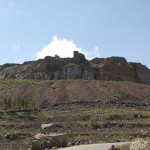
The modern Druze town of Shahba marks the spot where the Emperor, Philip the Arab, was born in the early third century AD. He ruled as Emperor from 244 to 249 and founded on this site a ‘new town’ to commemorate the 1000th anniversary of the foundation of Rome. A number of the major projects […]

Sheizar قلعة شيزر

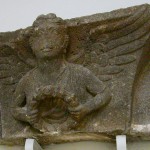
This Islamic fortress on the eastern side of the Orontes Valley played an important role in the confrontation with the Crusaders in their line of posts in the coastal mountains to the west. It was the seat of the local Islamic dynasty, the Banu Munqidh, one of whose members, Osama, provided us in his memoirs […]

Si`a سيع

This site near Qanawat in the southern reaches of the Jebel Hauran has yielded important insights into the art and architecture of this area in the early classical period. However, the widespread looting of the site for stone in the late Ottoman period has left little for the visitor to appreciate without a careful study […]

Shaqqa شقا

Today a small village in the Hauran, Saqqa (Byzantine name, Maximianopolis) was once a centre of some significance—a Roman colonia and later seat of a bishop. The town retains a remarkable collection of unusual buildings, all achieved in a highly decorated form in the local basalt. The building dubbed by the first European traveller to […]

Salamiye or Selamiye سلمية

The ancient town of Salamias was the seat of a Byzantine bishop, emphasising the importance of the northwest Syrian steppe in the late Roman and Byzantine centuries. The town was the birthplace of a dynasty that founded the Fatimid sect of Islam in the early eighth century. It was fortified in Ayyubid times (a little […]

Salkhad صلخد

The remains of the Ayyubid citadel al Salkhad in the southern Hauran, built into the cone of an extinct volcano, were little visited before the military base was removed from the site in the years immediately  pre-2011. Salkhad was a centre mentioned as early as the Old Testament (Salkha or Salcah), remaining in use as […]

Slim or Suweilim سليم

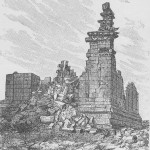
The only surviving remains of this beautifully decorated Roman temple are parts of the two wings (antae) of the portico facing out to the east. Merrill’s engraving after his visit in the 1870s gives further indications of the shape of the cella or shrine, now hemmed in by village construction. Photos at — http://www.flickr.com/photos/monsyr/sets/72157628722453917/ ما تبقى […]